
SURVIVING THE TEENS®
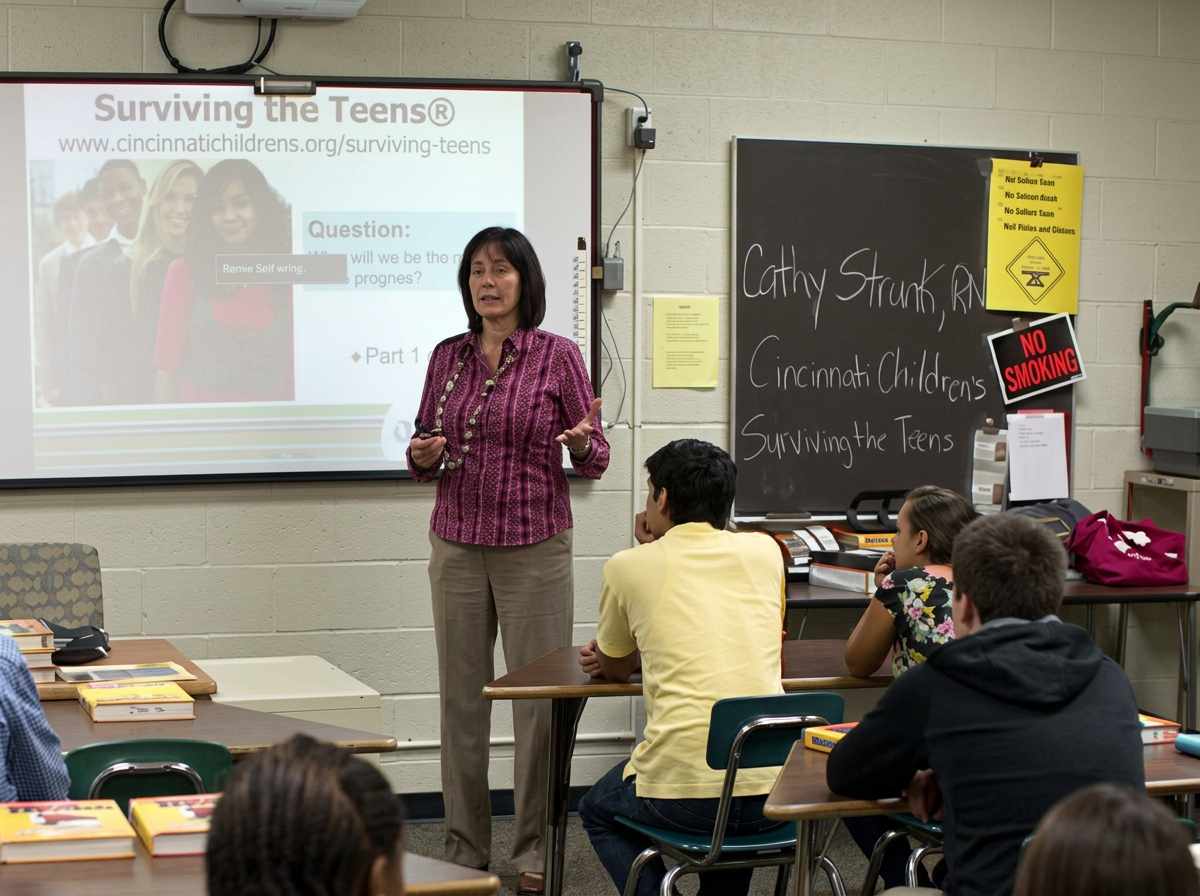
Surviving the Teens® began with a vision sparked by the J.E. & Z.B. Butler Foundation in 2000. Their commitment to preventing youth suicide enabled Cincinnati Children’s Hospital Medical Center to launch a school‑based program focused on depression, suicide awareness, contributing stressors, coping skills, and help‑seeking behaviors. In 2001, Cathy Strunk developed the Youth Depression and Suicide Awareness curriculum that became the foundation of this work.
In 2004, everything changed when Cathy’s 19‑year‑old son, Terry, was killed in a motorcycle accident. Cathy had been praying for a name for the program and was at a complete loss for what to call it. After Terry’s death, it dawned on her that he had not survived his teens, and God gave her the name Surviving the Teens. From that moment, the program expanded to include risk‑taking behaviors, a deeper discussion of grief and loss, and the search for hope.
Over time, God used Cathy’s pain to reach more young lives—teens sought help, families found guidance, and hope grew where despair once lived. What began as a prevention initiative became a mission shaped by faith, compassion, and the desire to equip adolescents with the tools they need to survive their most difficult moments and times of crisis.
Surviving the Teens® is offered here as a free, nationwide educational program, with all five sessions, videos, and resources available to the public below.
Program Description
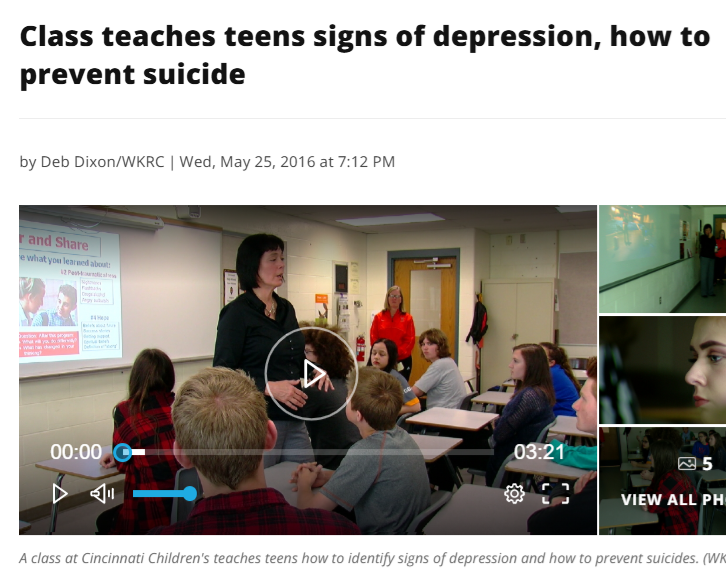
This 5‑day program—originally developed as a 4‑day format—was delivered by Cathy Strunk, MSN, RN, to 8th through 12th grade students in 45–50 minute health class sessions. Additional class settings included gym, psychology, and religion. Strunk taught the program until her retirement in June 2018.
Students were taught risk factors for depression related to eight stressor groups and adaptive ways of coping with these stressors. They learned to recognize signs of depression, suicide, and substance abuse through true stories of teens who had faced these challenges. Students were also taught ways to connect and communicate more effectively with family members, along with anger‑management and conflict‑resolution skills.
Program Content
The expandable section contains the content for each session of the 5‑day program, along with links to the 2014 training videos.
Photo Story Disclaimer: The 2014 Photo Story introduction was created by Cathy Strunk when Surviving the Teens® was part of Cincinnati Children’s Hospital Medical Center. It includes supplemental information that was not covered during classroom sessions to save time. Teachers used this 10‑minute video to introduce the program and provide additional background. Surviving the Teens® is no longer an active program of Cincinnati Children’s Hospital Medical Center, and this video does not imply current affiliation. Surviving the Teens® is now a registered trademark of Cathy Strunk.
Training Video Disclaimer: The training videos were filmed with volunteer students by ChiliDog Pictures for demonstration purposes. They are not natural classroom sessions and do not reflect the spontaneous interactions that occurred during real Surviving the Teens® groups. Surviving the Teens® is no longer an active program of Cincinnati Children’s Hospital Medical Center, and these videos do not imply current affiliation.
-
The students’ teacher showed the Surviving the Teens Photo Story Introduction to participating students 1-2 days prior to the first day of the program.
Topics and student activities during the first session were:
Stressors and Coping
· Maladaptive and Adaptive Coping
· Most effective and least effective coping styles
· True stories used to facilitate discussion
Psychiatric Illness Stressors
· Trues stories used to facilitate discussion
· Signs/Symptoms of depression
· Treatments for depression
· Brief discussion of bipolar disorder
· Steps to LAST™ to help oneself
· Role-play Steps to LAST™ to help oneself
Medical Illness Stressors
· True story used to facilitate discussion
· Chronic and sudden illnesses
· Medications contributing to depression
Pair and Share Activities
You can watch the training video of Session 1 of the program at this link: https://youtu.be/aK5P4uzqRF4
-
Topics and activities during the second session were:
Substance Use Stressors
· True story about substance abuse
· Facts About Alcohol
· Facts About Marijuana
Family Stressors
· Video of story of family conflict
· Positive ways to deal with family conflict
· True stories used to facilitate discussion
· Rules for fighting fairly
· Anger management – role plays
· Genetics contributing to depression, suicide, and substance abuse
Pair and Share Activities
You can watch the training video of Session 2 of the program at this link: https://youtu.be/ZXowha9miLc
-
Topics and student activities during the third session were:
Peer/Social, School, and Self-Esteem Stressors
· Video about peer/social and school stressors
· True stories used to facilitate discussion
· Ways to improve self-esteem
· Warning signs of suicide
· Steps to LAST™ to help troubled friend/teen
· Role play Steps to LAST™
You can watch the training video of Session 3 of the program at this link: https://youtu.be/YX9o-omxHTc
-
Topics and activities during the fourth session were:
Formative assessment
· Responding to suicide messages on social media and through texting
· Applying Steps to LAST® in real life scenarios
Trauma/Violence Stressors
· Video of story of abuse
· Date rape
· True stories used to facilitate discussion
· Post-traumatic stress disorder
· Discussion of teasing/bullying
· Ways victims and bystanders can respond to teasing/bullying
· Setting SAFE™ boundaries
Pair and Share Activities
You can watch the training video of Session 4 of the program at this link: https://youtu.be/it1ZaamC_iE
-
Topics and student activities during the fifth session were:
Grief and Loss Stressors
· True stories of grief/loss used to facilitate discussion
· Facts about grieving
· Stages of grieving
· Feelings related to grieving
· Discussion of what helps/hurts teens who are grieving
· Finding hope
Pair and Share Activities
You can watch the training video of Session 5 of the program at this link: https://youtu.be/BzGb7fBq8rU
Program Impact
Cincinnati Children’s Hospital Medical Center highlighted Surviving the Teens® in its 2014 Community Benefit Report, recognizing the program’s role in supporting adolescent mental health and suicide‑prevention efforts across the community. The report documents how the program contributed to the hospital’s broader mission of improving the well‑being of youth and families.
Dr. Keith King, PhD, MCHES, conducted a formal evaluation of the Surviving the Teens® program during the 2008–2009 school year. His study showed a significant reduction in students’ suicidal behaviors, with local news outlets highlighting the program’s positive impact.
“Over the past 10 years, I’ve seen firsthand how this program saves lives. Several former students have told me they didn’t feel comfortable seeking help for themselves or others. They were only able to do it because Surviving the Teens® taught them how. ”
Steps to LAST™
*
Steps to LAST™ *

Cathy Strunk credits the creation of Steps to LAST™ to divine inspiration. She had prayed for a simple mnemonic teens could remember in moments of crisis—one that would help them seek support for themselves or for friends. The word “last” reflects both surviving and enduring, and Cathy emphasized that with the right resources and support, teens can also thrive. Although the original Steps to LAST™ crisis card is no longer used, it is included here for historical context. The updated Steps to LAST™ resources are the materials used today to support youth, families, and schools.
These images show the front and back sides of the original Steps to LAST crisis cards that were given to students participating in the Surviving the Teens® program at Cincinnati Children’s Hospital Medical Center. Thousands of students received these 2-sided cards over the years as part of the program’s effort to promote help‑seeking, peer support, and suicide‑prevention awareness. Funding for the original Steps to LAST™ crisis cards and posters was provided by Debbie Brown through the Justin Brown Memorial Foundation.
The downloadable slides on the Resources page were also used in the Surviving the Teens® student program to teach the Steps to LAST™ model, but they have been updated.
CCHMC no longer uses Steps to LAST cards. Surviving the Teens® was revamped in 2019 and is now called Adapt for Life. Because crisis numbers and website links have changed, please use the updated crisis resources on the Resources page of this website, including the 988 Suicide & Crisis Lifeline.
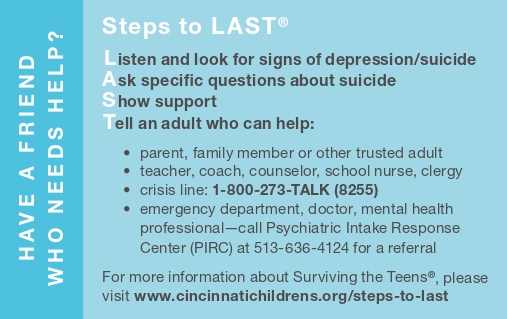
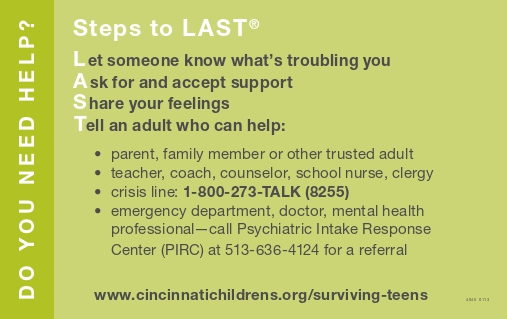
These posters were part of the original Surviving the Teens® program and were displayed in participating schools. Because crisis numbers and website links have changed, please use the updated crisis resources on the Resources page of this website, including the 988 Suicide & Crisis Lifeline. Steps to LAST™ was a model used within Surviving the Teens® program and is no longer used by Cincinnati Children’s Hospital Medical Center. Funding for the Steps to LAST™ posters and crisis cards was provided by Debbie Brown through the Justin Brown Memorial Foundation.
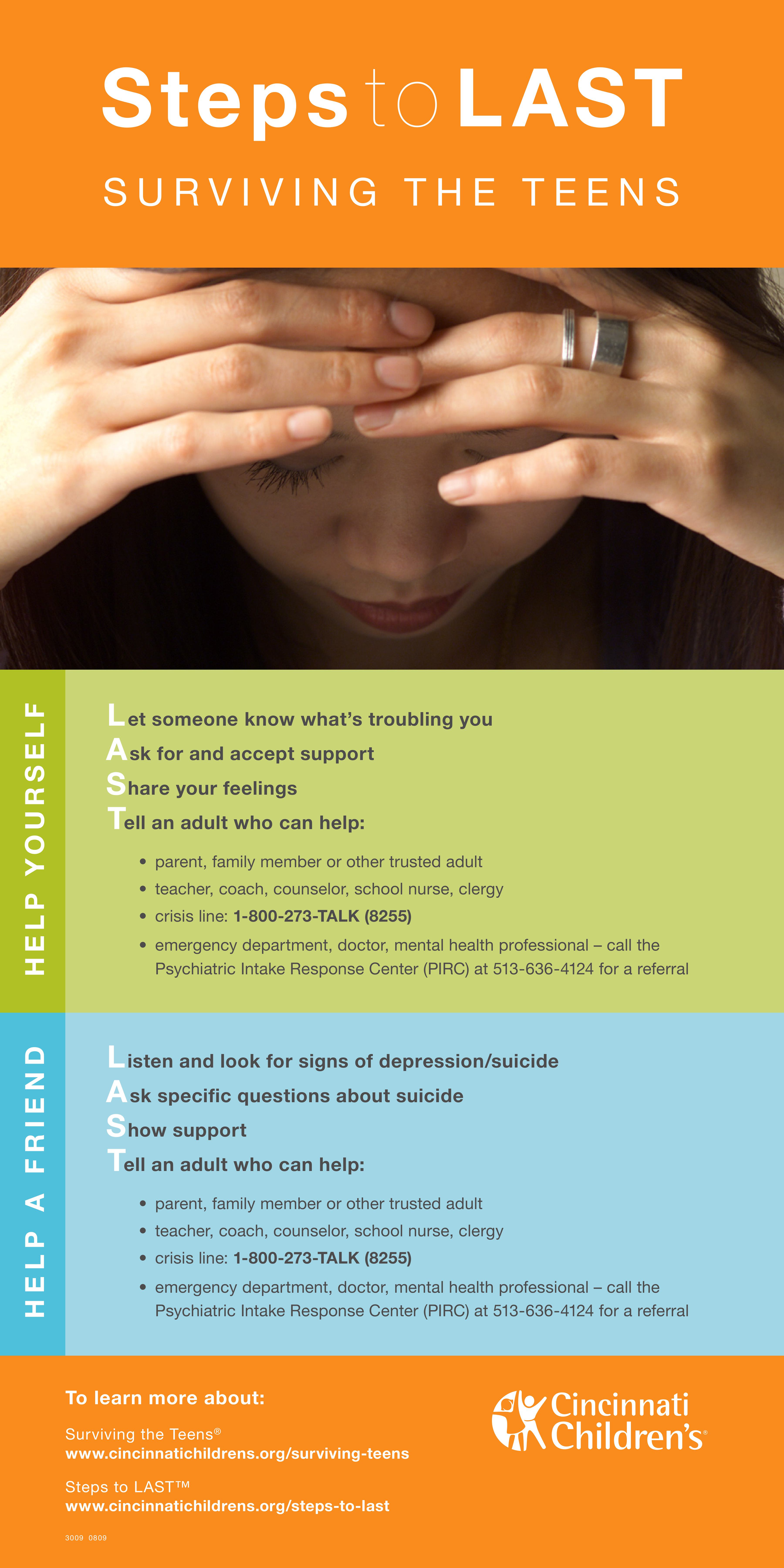
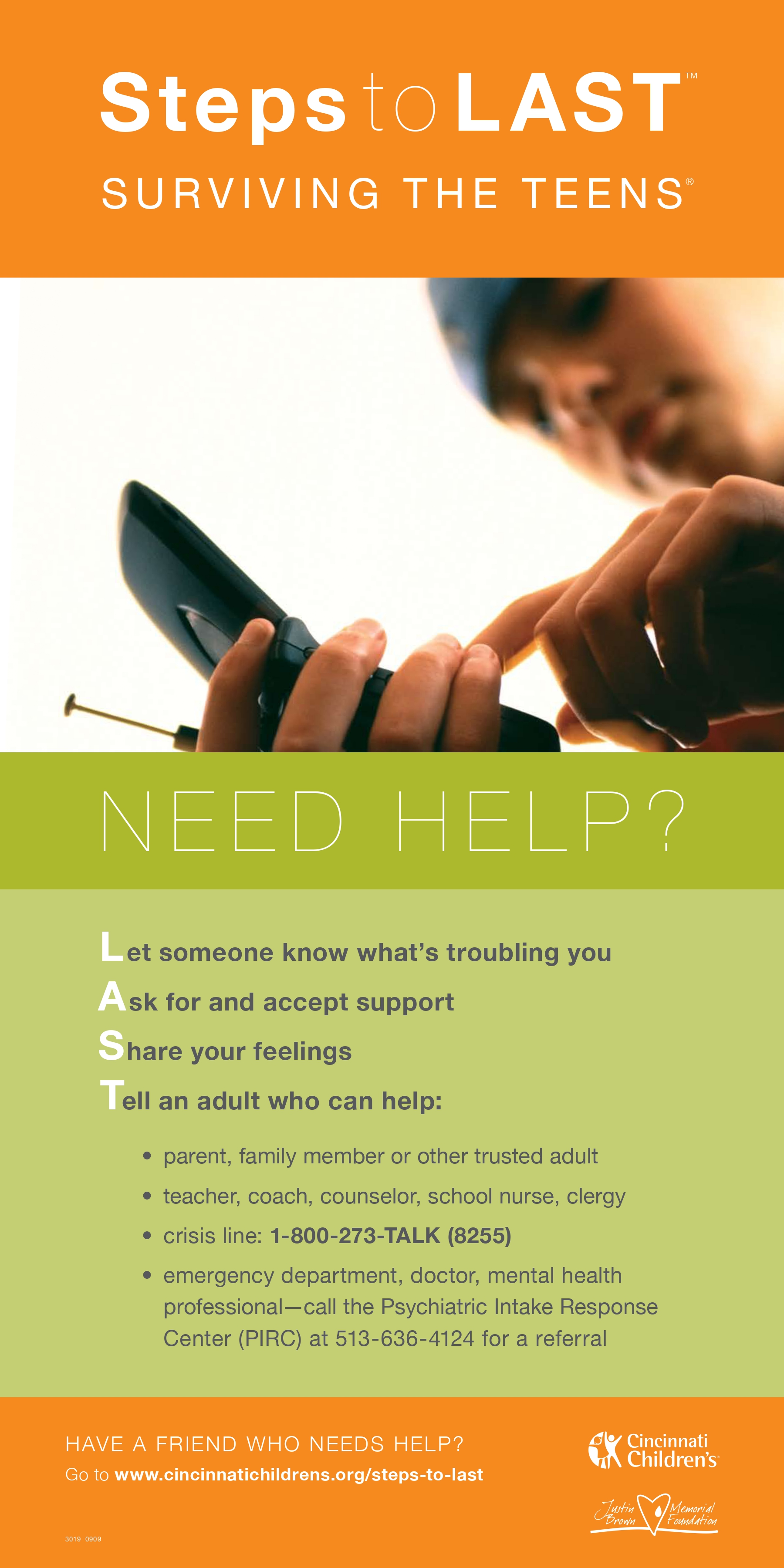
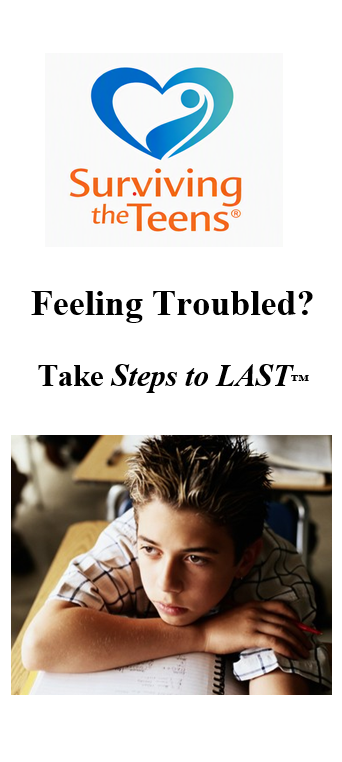
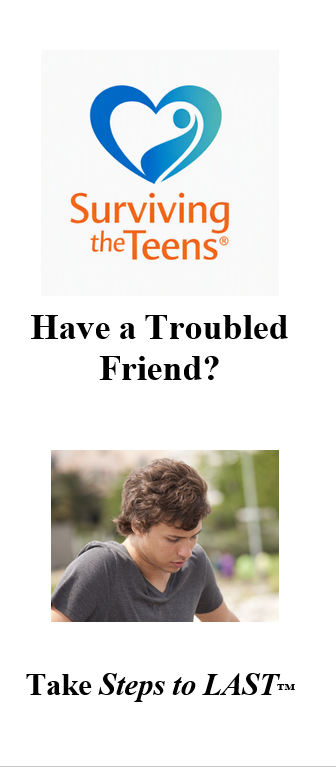
Download the Steps to LAST™ brochures to learn more about each step.
Inside the Silent Struggle of Adolescents
*
Inside the Silent Struggle of Adolescents *
To understand the heart of the Surviving the Teens® program, it helps to first understand the emotional reality many adolescents face every day. Dr. Keith King captured these struggles with clarity, compassion, and honesty. Dr. King, PhD, MCHES, Professor and Doctoral Program Director of Health Promotion and Education at the University of Cincinnati, is a nationally recognized expert in adolescent suicide prevention, substance‑abuse prevention, and youth mental‑health promotion. These excerpts offer a deeper look at the emotional struggles many adolescents face—and they reflect the very reasons the Surviving the Teens® program was created.
The Weight They Wake Up With
“Every day, millions of adolescents wake up and begin a battle that few people truly see. The alarm sounds, and before their feet ever touch the floor, they feel a familiar heaviness settle over them. They stare at the ceiling and wonder how they will find the energy to face yet another day that feels so much like the one before it. Eventually, they drag themselves out of bed, grab an energy drink or a cup of coffee, and look into the mirror at a tired, disconnected and lonely face staring back at them. They get dressed, put on a mask, and try to appear okay to others while hiding their innermost struggles.”
The Mask They Wear at School
“They take classes they do not enjoy, read articles they do not believe in, and complete assignments they do not see as meaningful. They talk to classmates they do not fully trust, try to fit into groups in which they never quite feel accepted, and hide how they truly feel. They laugh when they do not feel like laughing. They smile when they feel like crying. They hide their fears, insecurities, and pain behind a carefully constructed version of themselves, terrified that if others saw what was really happening inside, they would be rejected. And when the school day ends, the struggle follows them home.
They come home to families often filled with tension and disconnect, and parents they do not feel comfortable talking with. So often they want to have meaningful conversations but are uncertain how to express their sadness, emptiness, and confusion. They long to be understood yet cannot find the words to describe what they are experiencing.
So they retreat. They dive into social media feeds, YouTube videos, Instagram stories, TikTok clips, online games, anything that offers them even a momentary escape from the pain they feel inside. They search for connection, purpose, and belonging. And yet, with all the technological advancements, they still feel something is missing. Something more is needed. ”
When Hope Begins to Fade
“They in turn feel depressed, anxious, stressed out, alone, and at a complete loss. So frustrated. They feel like they are constantly fighting an uphill battle, only to be continuously pushed back down by so many others. They are bombarded with questions that relentlessly echo in their minds:
Why do I feel this way?
What is wrong with me?
What is the purpose of my life?
Do others feel this way too?
Will things ever get better?
Is there any hope at all for me?
They look for answers and find none. The barriers and obstacles are overwhelming. The future seems uncertain. And little by little, hope begins to fade. Fear replaces confidence. Confusion replaces purpose. Isolation replaces connection. They become distraught, angry, afraid, and hopeless. Their continual search for meaning becomes exhausting. And so, eventually, they stop looking for answers.
They are simply tired. So very tired.
Desperate for relief, so many turn to short-term solutions to numb the pain and quiet the depression, even if only for a moment. They hope for some immediate relief, anything to distract them from their deep lack of life satisfaction. They seek escape through alcohol, drugs, sex, food, gambling, unhealthy relationships, obsessions, anger, fear, and social media. They begin to develop addictions and dependencies. They try to control everything. They reach for anything that offers temporary comfort from the deeper wounds they feel. And in turn, many experience depression, anxiety and thoughts of suicide.”
What Teens Really Want
“The reality is that behind many teenage smiles are silent battles. Behind many successful students are profound internal struggles. Behind many closed doors are hearts crying out for help. They are not looking for perfection. They are not asking for easy answers. They are not expecting someone to solve every problem in their lives. They simply want hope. They want someone to tell them that they are not broken. That they are not alone. That they are important. And that their life has value, purpose and meaning. That they are lovable. And they want to believe that there is a way forward.
But in all that, there are questions:
Who will help them?
Who can they turn to?
Who will listen to them and hear them?
Who will offer them hope?”