

Surviving the Teens® Resources

Download the Steps to LAST™ brochures to learn more about each step.
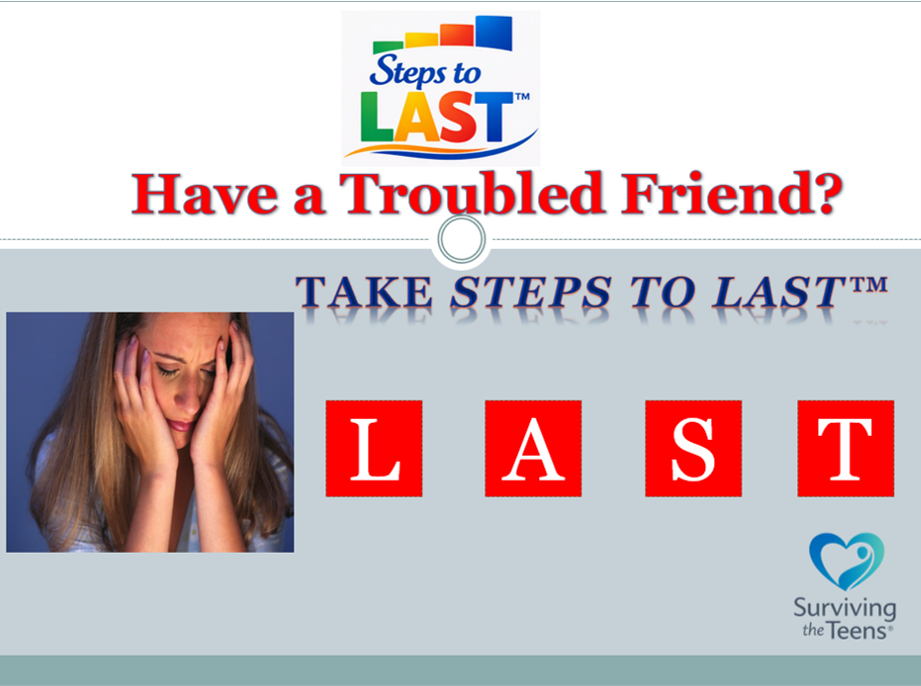
Learn more about how to help a troubled friend by viewing the PowerPoint PDF above.
Tips for Parents
Understand How Your Child Copes
Children use different strategies to manage stress. Some are healthy; others may increase anxiety or depression. Notice how your child responds to stress—talking, withdrawing, staying busy, or taking risks—and acknowledge what you see without judgment. Your calm presence helps them feel safe enough to share more openly.
Understand Your Child’s Stressors
Stress can come from school pressure, friendships, bullying, family conflict, identity struggles, or social media. Identify the stressors you observe and how they affect your child’s mood and behavior. Talk with your child about what feels overwhelming and explore healthy ways to reduce stress and respond to difficult situations.
Understand Risk Factors for Suicide
Depression is the strongest risk factor for suicide, followed by substance use. Other important risk factors include trauma, chronic stress, social isolation, bullying (including cyberbullying), identity-based discrimination, and previous suicide attempts.
Early signs of depression may include changes in sleep or eating, irritability, withdrawal, fatigue, difficulty concentrating, restlessness, anxiety, sensitivity to criticism, pessimism, or feelings of worthlessness. If you notice several of these changes, contact your child’s doctor or a mental health professional.
Watch for Warning Signs of Suicide
Sudden changes in behavior, appearance, or mood can be warning signs. Even a shift toward calmness after a period of distress may indicate your child feels they have found “a way out.”
Warning signs may include:
Drop in grades or school avoidance
Feeling like they don’t belong or that no one cares
Withdrawing from friends or activities
Feelings of hopelessness or helplessness
Increased risk-taking
Increased use of alcohol or drugs
Giving away prized possessions
Talking, writing, or joking about death or suicide
Take all warning signs seriously. Trust your sense that something isn’t right.
Reduce Access to Lethal Means
Limiting access to dangerous items is one of the most effective suicide prevention strategies. Remove or securely lock firearms, medications (prescription and over-the-counter), sharp objects, and toxic substances. Safely dispose of unused medications and monitor access to alcohol and drugs.
Keep Communication Open
Create an environment where your child feels safe talking about difficult emotions. Listen without interrupting or judging. Reflect what you hear and imagine how your child might be feeling.
If you are concerned, ask directly about suicidal thoughts. Asking does not “put the idea in their head”—it opens the door for honest conversation and relief. Share your concerns, express your care, and remind your child they are not alone.
Create a Crisis Plan and Get Help
Help your child understand that seeking help is a sign of strength. Create a list of trusted adults and crisis resources your child can reach out to, and keep it in a visible place. Include family members, friends, school staff, coaches, faith leaders, and crisis services such as the 988 Suicide & Crisis Lifeline, which teens can call or text 24/7, along with Crisis Text Line, which connects teens to a trained counselor when they text HOME to 741741.
If your child is in immediate danger or actively suicidal, take them to the Emergency Room.
Tips for Teens Coping with Depression
Stay Connected with Family and Friends
Depression can make you feel alone, unloved, or convinced your family is against you. These thoughts are symptoms of depression, not reality. Staying connected helps break through those feelings. Spend time with people who care about you—share meals, talk about the highs and lows of your day, and let trusted family members know how you’re feeling. Reaching out is the first step of LAST to help yourself: Let someone know what’s troubling you.
Stick with Psychotherapy
Psychotherapy is one of the most effective ways to reduce symptoms of depression. It can help you:
Understand and manage your thoughts, feelings, and actions
Improve communication and problem-solving skills
Build healthier coping strategies
If therapy doesn’t seem helpful at first, tell your therapist. Your feedback helps them adjust sessions so they work better for you.
Take Prescribed Medications as Directed
If your doctor prescribes antidepressant medication, take it exactly as directed. Medication can reduce severe symptoms of depression, but stopping it suddenly can cause symptoms to return or worsen. Always talk with your doctor before making any changes.
Avoid energy drinks, alcohol, and certain herbal products, which can interfere with how medication works. Contact your doctor if: • Your depression gets worse • You have unpleasant side effects or feel unusually anxious or restless • You have thoughts of harming yourself or wanting to die
Your doctor can help you find the safest and most effective treatment plan.
Get Enough Sleep
Most teens need 9–10 hours of sleep each night. Depression can disrupt sleep, making it harder to fall asleep or stay asleep. If you struggle with sleep, try:
A calming snack before bed, such as warm milk or a protein-rich food
Relaxation exercises like deep breathing or progressive muscle relaxation
Avoiding caffeine after 2 PM
Turning off screens at least 30 minutes before bedtime
If sleep problems continue, talk with your doctor. Sleep difficulties can be part of depression or another medical issue that needs attention.
Get Enough Exercise
Aim for 30–60 minutes of physical activity each day. Depression can lower your energy, so you may need to build up gradually. Exercise can improve mood, increase confidence, and reduce anxiety and tension. Try activities such as:
Biking, rollerblading, or brisk walking
Jumping rope, dancing, or using an exercise video
Playing a sport or an active video game
Choose activities you enjoy so exercise feels easier to maintain.
Eat Healthy Foods
Depression can change appetite and eating habits. A balanced diet supports both your brain and body. Eat three meals a day and avoid skipping breakfast. Choose healthy snacks like fruit, vegetables, yogurt, or nuts instead of candy or sugary foods.
The Rural Behavioral Health Institute (RBHI) focuses on rural communities, but their virtual model and early‑intervention tools offer valuable insights and support for families everywhere. RBHI works to close the gap between mental‑health need and access for young people by ensuring every child can reach support when they need it. Their approach begins with early symptom identification through universal mental‑health screening in schools, followed by immediate intervention for students at elevated risk. Families receive comprehensive care‑connection support so they are not left navigating the system alone. RBHI exists to make sure help reaches young people earlier, faster, and in the places where it’s needed most.